|
|
||
|
||
| Author: Anonymous Date: 10/19/2026 1:05:40 PM +1/-3 Show Orig. Msg (this window) Or In New Window | ||
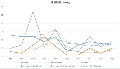
Over the last two decades, the U.S. helicopter air ambulance (HEMS / HAA) accident rate and fatal accident rate have significantly declined, driven by stricter regulations, enhanced safety management systems, improved technology (such as night vision, autopilots, and flight data monitoring), and better training. [1, 2, 3] Key Trends & Data (Last Two Decades)
If you'd like, I can help you find:
|
||
| Reply Return-To-Index Display Full Msg Thread Rules of Engagement Terms of Use | ||
|
|
||
|
||

 Legit SIM training
+4/-1 How many EMS monkeys get it? 10/19/2026 11:09:06 AM  Accurate assessment
+1/-1 sim you later! 10/19/2026 11:17:18 AM
Accurate assessment
+3/-4 wait what? 10/19/2026 11:43:39 AM
Accurate assessment  +1/-4 Anonymous 10/19/2026 1:17:31 PM
Accurate assessment
+0/-1 lkdsjglakjdgf 10/25/2026 2:46:23 PM
You do realize
+2/-0 Anonymous 10/25/2026 5:52:54 PM
accidents aren't "rising"! They've been steadily decreasing for last two (NT)
+2/-2 decades. 10/19/2026 1:03:31 PM
Here's the stats:
+1/-3 Anonymous 10/19/2026 1:05:40 PM
Chris doesn't know this because he's barely out of diapers (NT)
+0/-1 and thinks the world began with him 10/19/2026 1:07:12 PM
Legit SIM training
+1/-1 what’s funny to me is that 10/19/2026 11:26:49 AM
Legit SIM training
+0/-2 my advice 10/19/2026 12:02:32 PM
Legit SIM training
+0/-2 in summation the op said 10/19/2026 12:06:57 PM
Yet another Chris rant and rave, unfounded nonsense (NT)
+0/-1 He's the largest blockhead there is here! 10/19/2026 1:02:05 PM
Yet another Chris rant and rave, unfounded nonsense
+1/-1 Good 10/19/2026 1:15:17 PM
Legit SIM training
+0/-0 You sound like 10/19/2026 1:44:50 PM |